Tagged: data RSS

  • lw 6:32 pm on July 5, 2010 Permalink | Reply
    Tags: data, ,   

    Teens and Mobile usage in US 

    Adolescents have been called “digital natives,” but data suggests that they are both comfortable with new technologies, and yet not always as technically savvy as we collectively believe them to be.

    Half of teens send 50 or more text messages a day, or 1,500 texts a month, and one in three send more than 100 texts a day, or more than 3,000 texts a month. – Pew Research Center

    view larger version
    teenmobileuse

     
    • Kai Collins 7:14 pm on July 9, 2010 Permalink

      Mobile music is the trend nowadays, it makes sense to have great music on your mobile phone.`;’

    • Bradley Thomson 4:56 pm on July 26, 2010 Permalink

      mobile music is great, i love to listen to mp3 while on the move.~;~

  • lw 6:55 am on May 21, 2010 Permalink | Reply
    Tags: data, , , youtube   

    YouTube infographic 

    YouTube turns 5. The following infographic provides an interesting look at some data around the vid sharing giant. In many ways it is difficult to wrap your head around the sheer volume of 1′s and 0′s that swirl around YouTube and its users.

    youtubedata

     
  • lw 7:55 pm on February 27, 2010 Permalink | Reply
    Tags: data, , stats,   

    The State of the Internet 

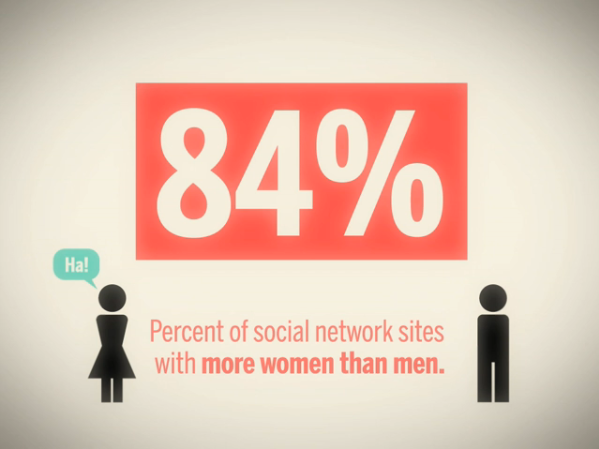
    I often post about data viz. Here’s a nice animated vid that compares internet data across services, outlets and country.

    screen-capture-127

    234 million websites

    126 million blogs

    12.2 billion videos viewed monthly on youTube (US)

    1.4 billion email users

    1.73 billion internet users

    JESS3 / The State of The Internet from Jesse Thomas on Vimeo.

     
  • lw 7:11 am on February 22, 2010 Permalink | Reply
    Tags: bladerunner, data, FOE, , ,   

    Transmedia Design and Conceptualization – The Making of Purefold 

    MIT’s Futures of Entertainment conference is held each fall. I had the privilege of speaking at the event in 2008. It’s an amazing mix of people from various sides of the industry. This past year the conference had a number of excellent transmedia focused panels. In the following panel the team behind Purefold give an inside look at the project.

    From MITs site
    Drawing together members of Ag8, creative collaborators, and representatives from a major brand sponsor, this panel will examine the project from a variety of perspectives. Exploring the motivations for building a transmedia project around Blade Runner, the panel looks at the potential transmedia might offer for revitalizing older properties. It explores the roles different stakeholders play in the conception and design of a project, as well as the challenges of meeting varying desires and ambitions. The panel considers whether some genres are better suited for transmedia properties than others, and looks at how to extend existing properties with substantial fan bases, considering questions of co-creation and fan/audience production.

    Moderator: Geoffrey Long – Gambit-MIT
    Panelists include: David Bausola – Co-founder of Ag8; Tom Himpe – Co-founder of Ag8; Mauricio Mota – Chief Storytelling Officer, co-founder The Alchemists; C3 Consulting Practitioner; Leo Sa – Petrobras

     
  • lw 8:55 pm on February 21, 2010 Permalink | Reply
    Tags: data, , , ,   

    thesixtyone 

    I’ve been tracking thesixtyone for a bit. The first version of the site matched social gaming with music discovery. The newest incarnation has taken a slightly different approach one which is more discovery focused with a mix of simple challenges called quests that encourage you to listen to music and gain reputation points.

    screen-capture-102

    The part I love about the new design is the simplicity and richness of the interface.

    61

     
  • lw 8:27 am on February 3, 2010 Permalink | Reply
    Tags: data, net   

    State of the Internet 

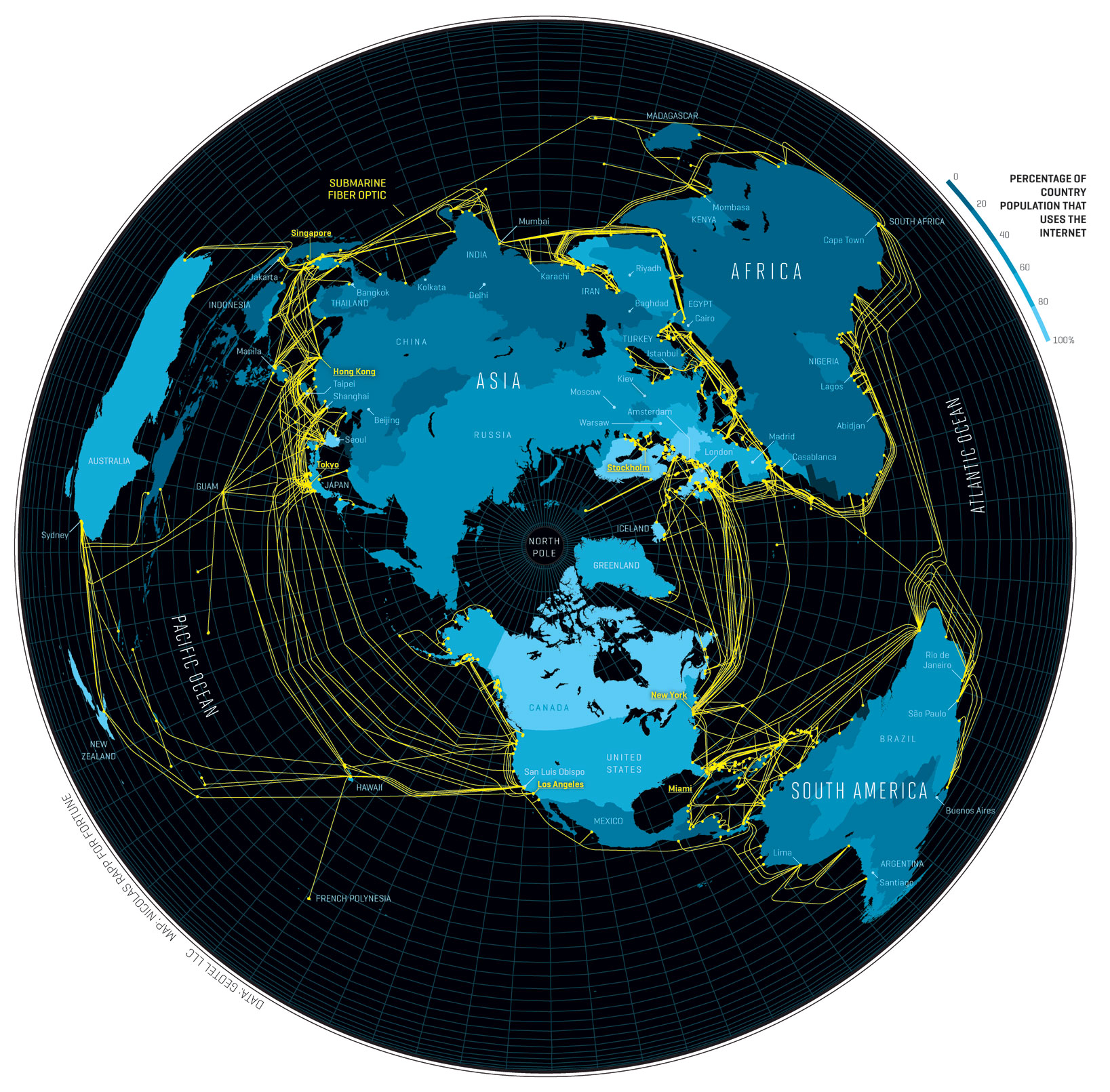
    A visual snapshot of internet consumption – provides an interesting look at the state of the internet in 2009.

     
  • lw 7:06 am on January 21, 2010 Permalink | Reply
    Tags: , , curation, data, ,   

    This Decade is About the Filter 

    More than a decade ago it was “search” that was driving innovation and large investments in both infrastructure and talent. When Google first started indexing unique URLs in 1998 there were already 26 million. Two years later the amount of indexed pages had crossed the billion mark. Flash forward to this winter and the amount of unique URLs exceeds 1 trillion.

    We are swimming in a sea of data. On average Americans wade through 34 gigs of information a day according to a recent report by researchers at the University of California, San Diego. The ability to “filter” this information will drive future innovation. How people are posting, commenting and clicking will greatly impact the ways films are created, curated and shared over the next decade.

    The desire to tap into social data is evident in recent deals that have Google, Microsoft and Yahoo lining up to access Twitter’s feed in an effort to improve their own traditional search results. The fact that three leaders in search are interested in something as small as 140 characters of information points to the value of social streams. From breaking news instantly, in many cases before traditional outlets, the power of word of mouth threatens to devalue massive ad spends by the studios; the ability of people to connect and communicate in real time through handheld devices is challenging many established industries while at the same time enabling a new form of social curation.

    READ MORE

     
  • lw 9:51 am on January 6, 2010 Permalink | Reply
    Tags: data, historic, viz   

    Visualizing empires decline 

     
  • lw 9:39 am on January 6, 2010 Permalink | Reply
    Tags: chart, data,   

    Phone Comparison 

    n1comparison

     
  • lw 6:29 am on December 30, 2009 Permalink | Reply
    Tags: data, filter, news, , ,   

    Filtering the news and tv 

    This past week I came across two filtering / aggregation projects which were both developed within internal lab divisions – one from url shortening service Bit.ly and the other from Google.

    Bitly.tv takes the 2 billion plus links that flow through the service and filters them to find trending vids. Based upon Bit.ly’s own bitrank algorithm which measures popularity, persistence and velocity in an attempt to predict what could go viral. I would imagine Bit.ly is swimming in interesting trending data that can be monetized in a variety of ways. This marks the first of a number of filtering projects that the company plans to rollout.

    Living Stories is a collaboration between Google, the New York Times, and the Washington Post. An experiment to rethink the presentation of the news in an online environment. The effort aggregates a collection of stories surrounding a topic, presents a nice timeline view and attempts to harness a community discussion around the newsworthy topics. It’s early yet but you could see this merging at some point with google reader. I’d love the ability to trace linkage and timelines between news stories.

     
  • lw 3:34 am on December 22, 2009 Permalink | Reply
    Tags: data, ,   

    Storystreams 

    In the winter issue of Filmmaker Magazine, I talk about how data can be used to discover, curate and create stories. I’m fascinated by the concept of marring various real-time and social data to generate a type of “storystream.” A perfect example is “We Feel Fine,” which crawls the web looking for the phrases “I feel” and “I’m feeling.” But where We Feel Fine is a document of what is actually occurring online it represents more of a hybrid documentary then a “narrative.” In terms of narrative usage I’ll post later in more detail about some of things we’re developing around my newest transmedia / feature project HiM but for now I’d like to highlight another use of social data as a communication/story path for a game.

    frontpage_sherlock

    The recent release of a Sherlock Holmes’ version of TweetDeck represents an interesting usage of the streamreader. A streamreader similar to a feedreader is a way to aggregate your social feeds. The Sherlock Holmes skinned version of TweetDeck acts as a companion to the AQKA / Hide and Seek designed game 221b which leads players directly into the first scene of the film when it opens Christmas Day. The skinned TweetDeck is intended to be a simple way to keep up with updates and the conversation surrounding the game.

     
  • lw 4:10 pm on November 28, 2009 Permalink | Reply
    Tags: , , data,   

    BOOK: We Feel Fine 

    screen-capture-34

    We Feel Fine” an expansive project that has mined the web since 2005 for the phrase “I Feel” has expanded to include a beautiful book that captures the project.

    screen-capture-33

    screen-capture-35

    I’ve been following the “We Feel Fine” project and a number of collaborations between Jonathan Harris and Sep Kamvar that harness data in interesting and artistic ways.

    Here’s how Sep Kamvar describes the project on his site.

    “Since August 2005, We Feel Fine has been harvesting human feelings from a large number of weblogs. Every few minutes, the system searches the world’s newly posted blog entries for occurrences of the phrases “I feel” and “I am feeling”. When it finds such a phrase, it records the full sentence, up to the period, and identifies the “feeling” expressed in that sentence (e.g. sad, happy, depressed, etc.).

    Because blogs are structured in largely standard ways, the age, gender, and geographical location of the author can often be extracted and saved along with the sentence, as can the local weather conditions at the time the sentence was written. All of this information is saved.”

    READ MORE

     
  • lw 7:17 am on November 13, 2009 Permalink | Reply
    Tags: , data, visualization   

    DATA: Aaron Koblin ‘flight paths’ 

    24 Hours of Flight Data

     
  • lw 3:11 am on May 29, 2009 Permalink | Reply
    Tags: , data, ,   

    We Are Hunted 

    Twitter real-time search is starting to spawn various sites and services that are finding interesting ways to use the data that Twitter makes available. We Are Hunted has a new extension of their trending charts (they already track p2p, blogs, facebook, forums, myspace) for the top 99 tracks being tweeted about on Twitter. A visual interface, streamlined player and “click to buy” feature make for a simple discovery site. What excites me most is that the emerging real-time web is unlocking all types of new discovery options.

     
c
compose new post
j
next post/next comment
k
previous post/previous comment
r
reply
e
edit
o
show/hide comments
t
go to top
l
go to login
h
show/hide help
shift + esc
cancel